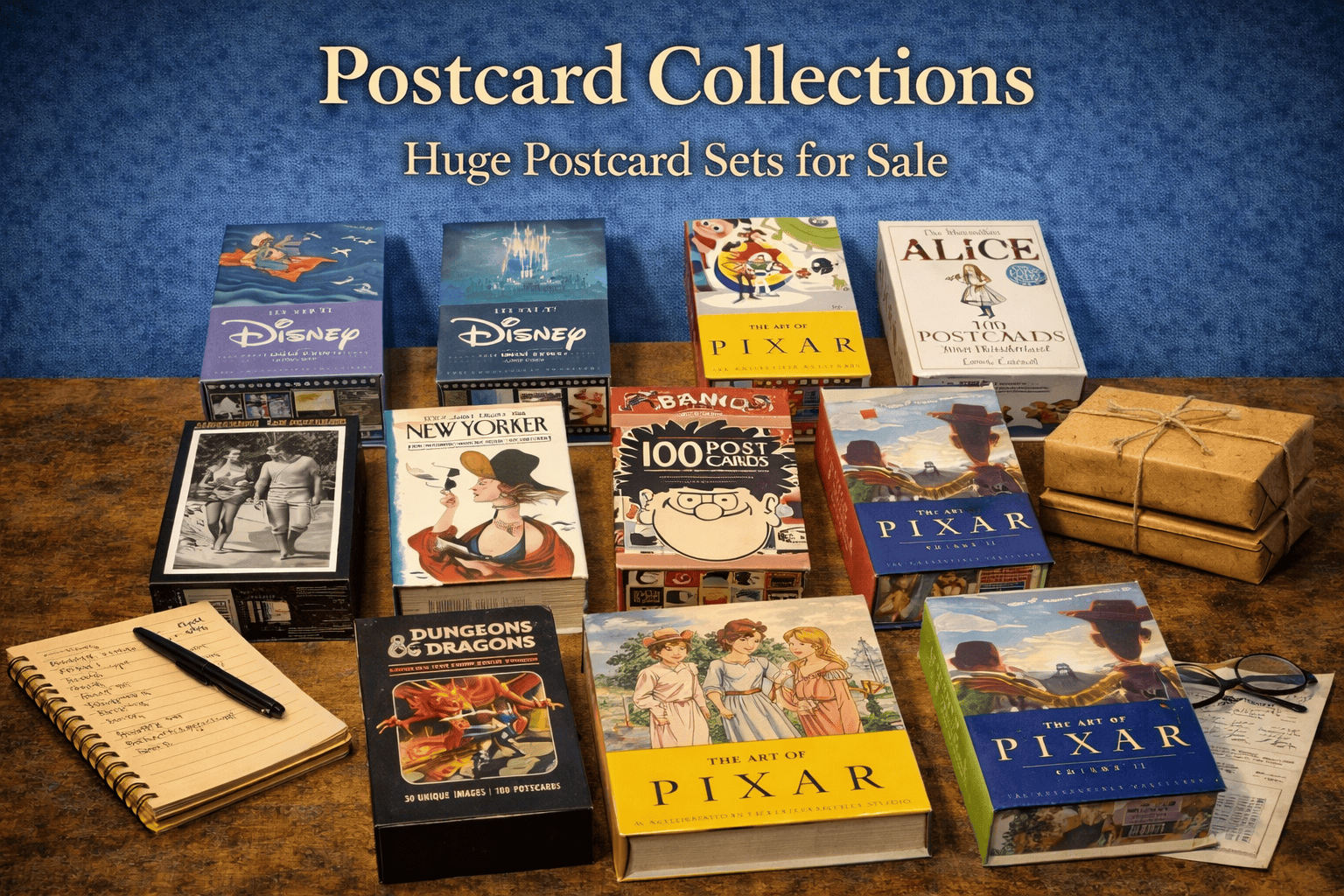
Position in the System
This sits across Source → Evaluate.
I am not trying to explain why postcards are a good idea in general.
This is based on what actually happens when different types of postcards are bought, listed, and held over time across my own listings.
How Postcards Actually Sell
Postcards can work as a stock line, but they do not all behave the same once listed.
In practice, most postcards sell within a relatively low price range, often around £2.50 to £5 depending on how they are presented.
Sales tend to come through gradually rather than quickly, with many items taking weeks or months to sell.
The outcome comes down to two things, how many people want them, and how much you paid for them in the first place.
Once you start listing consistently, you begin to see patterns, and those patterns matter more than any general advice. In my own listings, this shows up clearly across different postcard types, from steady sellers to slower niche stock.
The Different Types of Postcard Demand
Very Strong, Character-Based Demand
Some postcards sit above standard themed demand and produce both higher prices and more frequent sales.
For example, Peter Rabbit Postcards show how recognisable characters with broad appeal can lead to faster turnover and a higher price ceiling.
These combine strong demand with higher sale values, which makes them some of the most effective catalogue stock.
Broad, Recognisable Themes
Postcards with recognisable themes tend to attract more buyers and produce more consistent sales.
Film-related postcards are a clear example of this. In James Bond Postcards, the recognisable actors and scenes create a wider pool of buyers, which leads to more frequent sales over time and more regular incoming orders.
The trade-off is that these are usually more expensive to source, so while they sell more consistently, the margin is often tighter.
General Interest Postcards
These sit in the middle and tend to form a steady baseline.
Postcards such as London Postcards by David Gentleman have broader appeal than niche items, but they do not have the same level of demand as recognisable themed stock.
They tend to sell slowly but consistently, with sales continuing over several months rather than appearing in clusters. This works well when they are sourced cheaply, as the lower cost allows the slower sales to remain worthwhile.
Niche or Hobby-Based Postcards
At the narrower end of demand are postcards that rely on a specific audience.
Postcards such as Dungeons & Dragons Postcards depend on a smaller buyer pool, which leads to slower and less consistent sales.
These can still return a profit when bought at a very low cost, but they often sit for longer periods before selling, and they are not suitable if you are trying to build steady or predictable monthly sales.
What Drives Profit When Selling Postcards
Profit is not driven by demand alone, but by how demand and cost interact.
Stronger demand increases how often items sell, but usually comes with higher sourcing costs. Lower demand slows down sales, but can still work if the purchase price is low enough to leave margin.
In practice, you are always balancing how quickly something sells against how cheaply you can buy it.
A higher-demand postcard that costs more may sell faster but produce less margin, while a slower postcard bought cheaply can still produce a strong return over time.
Simple Model
Broad appeal leads to more frequent sales, general interest produces a steady baseline, and niche appeal leads to slower movement.
Whether that works or not depends on how low your cost is relative to that level of demand.
This is the pattern that shows up consistently once you start listing different types of postcards. This applies across all postcard types, from faster-selling character stock to slower niche items.
Why Postcards Work as a Stock Line
Postcards are simple to handle and straightforward to list, which makes them suitable for building a catalogue.
They take up very little space, they can be listed individually or grouped, and they allow you to build volume without committing large amounts of capital upfront.
The advantage is not speed, but accumulation, where sales build over time across a wider range of listings rather than relying on a small number of fast-moving items.
When Postcards Don’t Work
Postcards become difficult when cost and demand do not line up in practice.
If the cost per card is too high, or the demand is too narrow, the time it takes to sell becomes the limiting factor. In those cases, items can sit for months with slow sales, which makes them difficult to justify even if they are technically profitable.
This is where most mistakes happen, treating all postcards as if they behave the same once listed.
Final View: How to Think About Postcards
Postcards are not a single type of stock, but a range of different behaviours.
Some sell more frequently, some sell more slowly, and the outcome depends on where they sit within that range and how they were sourced.
Understanding that difference makes it easier to decide what to buy and how to build a catalogue that produces consistent returns over time.
And once you see that pattern clearly, it becomes easier to avoid buying stock that looks good but performs poorly.
Next Step
If you want to see how this works in practice, these examples show each type clearly: