At a Glance
James Bond postcards sell more easily than standard postcards because of the recognisable theme, with typical prices between £3.50 and £4.95, but the model only works when the cost per card is low enough to leave margin after fees and slower sales.
Position in the System
This sits in the Source → Evaluate stage.
I am deciding whether themed postcard sets like this are worth buying, listing individually, and holding as part of a working postcard catalogue.
Should You Buy James Bond Postcards to Resell?
These are worth buying when the purchase price is low enough to leave margin.
They sell more consistently and more frequently, but they are not fast turnover items, and the outcome depends heavily on how much you pay upfront.
At higher costs, the stronger demand does not compensate for the reduced margin.
What Are James Bond Postcards (and Why They Sell)?
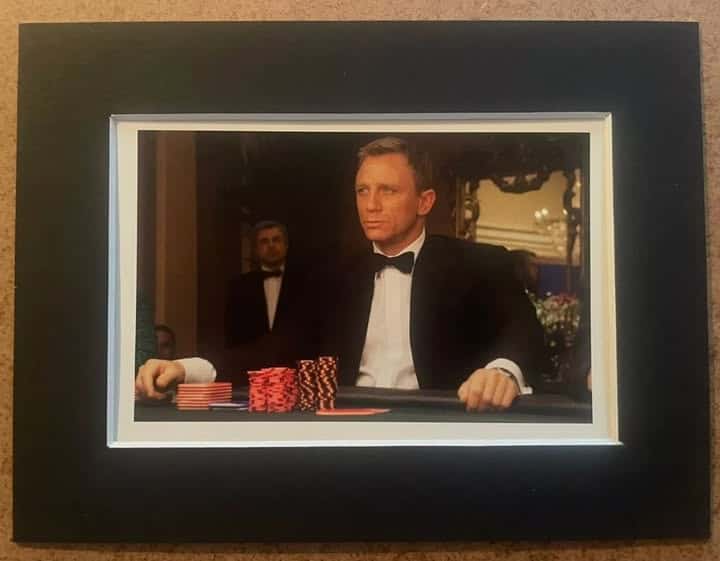
These postcards come from the James Bond Archives boxed set, featuring images from across the films, including actors, scenes, and promotional stills.
The key advantage is recognisability. These attract buyers searching for James Bond, specific actors, or particular scenes, rather than relying on general postcard demand, which makes them easier to sell than non-themed stock.
Real Sales Data (From My Listings)
These postcards came from three boxed sets bought on eBay:
- Box 1: £18.94
- Box 2: £10.00
- Box 3: £7.00
- Total cost: £35.94 for 300 postcards, around £0.12 per card
From these, I listed a total of 300 units across different formats and variations.
Performance so far, over roughly the past year:
- Total revenue: £132.85
- Net return: £76.75
- Total active list value: £834.00
Most sales fall into a narrow range:
- Loose postcards: around £3.50
- Framed postcards: around £4.95
Sales come through individually rather than in batches, with steady movement over time rather than spikes.
These sales have come through with transactions appearing regularly over several months, including recent sales within the past few weeks. Most sales sit in a consistent price range around £3.00, which reinforces the stability of demand.
How Long Do They Take to Sell?
These are not fast sellers, but they move more easily than standard postcards.
Some listings convert earlier, usually those featuring recognisable actors or stronger scenes, but most sit before selling. Over time, sales come through individually rather than in waves.
This means capital is tied up, but at a low cost per card the model remains workable.
Sales are spaced out but more frequent than slower postcard types, with new orders continuing to come through months after listing.
What Actually Sells
Postcards featuring well-known actors, recognisable scenes, or stronger visual composition tend to sell first.
Cards with less distinctive imagery still sell, but they take longer and sit deeper in the listing cycle.
These tend to attract buyers searching for specific films or actors rather than general postcard buyers, which explains why certain images move more quickly than others.
How I List James Bond Postcards
I list these individually rather than as a set, as this allows buyers to choose specific scenes and generally leads to better overall returns.
I use two formats:
- Loose postcards at around £3.50
- Framed postcards at around £4.95
Framed versions achieve a higher price but move more slowly, while loose postcards sell more consistently.
Photos are kept simple, with clear front and back images, and one framed example to show how the postcard looks when displayed.
Where I Found These
These were sourced from boxed sets on eBay.
They do appear regularly, but pricing varies and lower-cost opportunities are not always available. The difference between paying £18.94 and £7.00 per box has a direct impact on whether the model works.
When I Wouldn’t Buy These
I would leave these if the cost per card is too high to support slower sales, or if the images in the set are mostly weak or repetitive.
I would also pass if I cannot realistically list them individually, as the model depends on separating the cards and selling them one by one.
My Rule for Buying These
These only work when the cost per card leaves enough margin after fees and slower sales.
At around 10p to 15p per card, the model works. Above that, the margin tightens quickly, and I would not buy these.
Profit Reality
These can produce stronger demand than standard postcards, but they are not automatically more profitable.
The structure remains the same, with low individual sale prices, fees and postage taking a share, and profit coming from consistency rather than individual sales.
The higher sourcing cost offsets some of the demand advantage, so buying price is the deciding factor.
There is consistent demand, with sales appearing regularly rather than only occasionally, which sets these apart from more niche postcard stock.
How These Compare to Other Postcards
Compared to standard tourist postcards, these sell more easily and attract a broader range of buyers.
Compared to London Postcards by David Gentleman these convert more easily due to the recognisable theme, but usually cost more to source, which reduces margin.
Compared to Dungeons & Dragons Postcards these have a much broader buyer base and sell more consistently, although both depend heavily on buying at the right price.
Final Verdict: Should You Buy Them?
These are worth buying when the purchase price is low and you are building a broader postcard catalogue.
The recognisable theme makes them easier to sell, but they are not a shortcut to profit. The outcome depends on buying well, listing consistently, and accepting slower, steady sales.