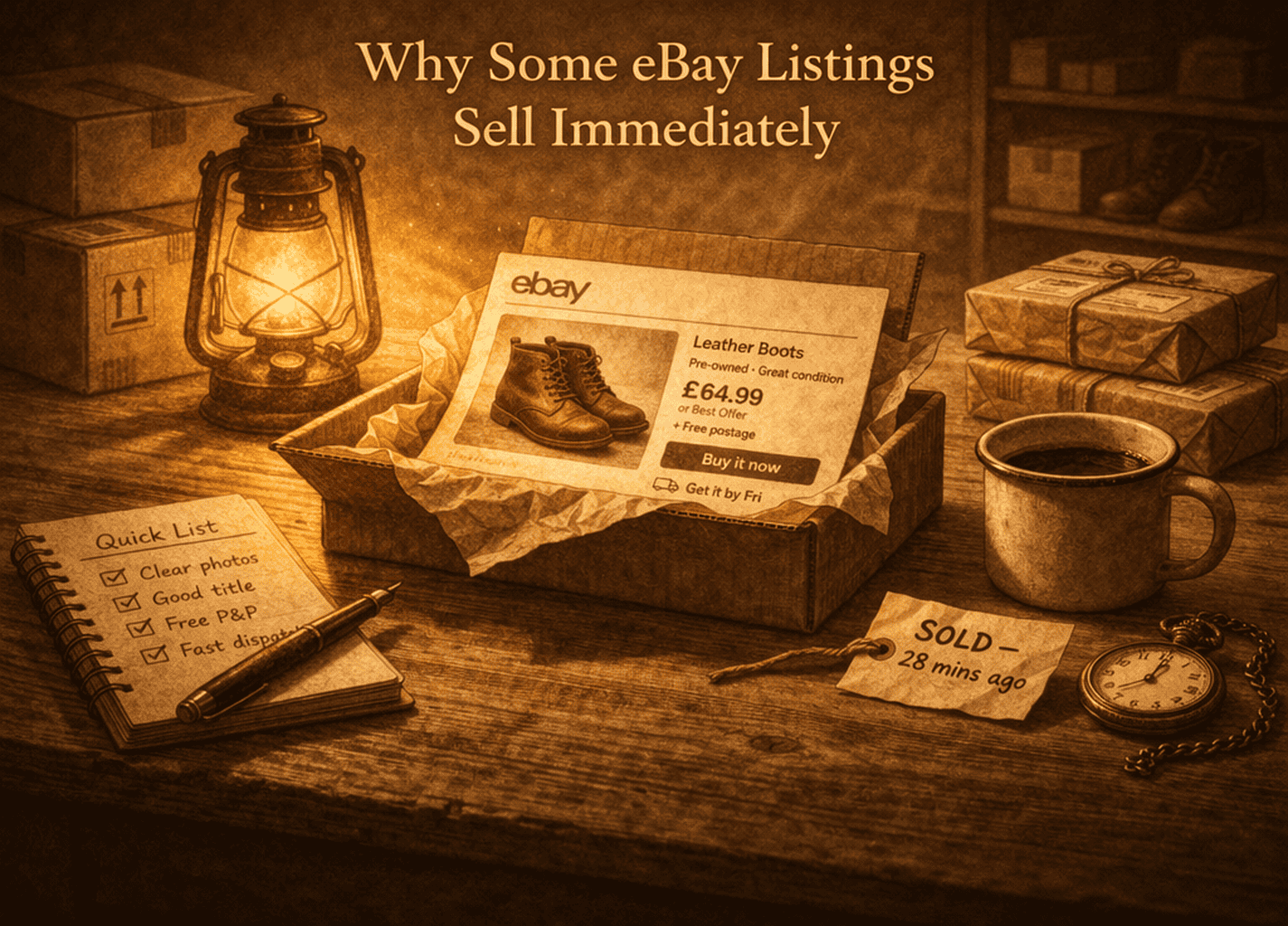
Why immediate sales are often misunderstood
When a listing sells quickly, it is easy to treat that outcome as confirmation that everything was done correctly, because the price, the listing, and the demand appear to align without resistance.
That interpretation feels logical when viewed after the sale, but it tends to misrepresent what actually happened during the decision, because it focuses on the result rather than the absence of the usual process that leads to it.
Most listings require time to compete, because buyers compare multiple options, hesitate, and work through small uncertainties before choosing, but some listings do not go through that delay at all, and the difference is not that something extra has been added, but that nothing has slowed the decision down.
Position in the system
This sits inside the listing stage, at the point where a listing is exposed to buyers and begins to compete. The full structure is mapped in the UK Marketplace Reseller Manual.
Source → Price → List → Diagnose → Dispatch → Returns → Repeat
By the time I reach this point, the item has already been priced and listed, and the listing is now being evaluated alongside other similar options.
In most cases, that evaluation takes time, because the listing is being compared, but in some cases that comparison is reduced or disappears, and what I am observing here is what changes when that delay is no longer present.
What usually happens before a sale
In most situations, a listing does not sell immediately, because it enters a period where it is viewed, compared, and considered alongside other similar items, even if that process only lasts a short amount of time.
During that period, buyers look at multiple listings, check details, and weigh their options, which introduces a natural delay between the listing going live and the sale taking place.
This is the normal behaviour of listings, and it is the same process I describe in What Makes a Listing Convert on eBay, where the decision forms through comparison rather than happening instantly.
What changes when a listing sells immediately
When a listing sells immediately, that comparison phase is reduced or removed, which means the listing does not need to compete over time in the same way.
The listing goes live, is seen, and is chosen before any meaningful activity builds, without a visible period of watching, offers, or adjustment.
The buyer does not need to work through the same level of comparison, because the listing is already close enough to what they are looking for that the decision feels straightforward.
This does not represent a different type of sale, but rather the same process without the delay that usually sits between visibility and selection.
Why comparison disappears
Comparison disappears when there is nothing in the listing that creates hesitation or requires further evaluation, because the buyer does not need to question whether it is the right option or whether something better might appear.
The listing is close enough to what the buyer is already looking for that the decision can be made without further effort, which removes the need to compare it against multiple alternatives.
This is not about the listing being perfect, but about it being clear enough, complete enough, and aligned enough with what the buyer expects that nothing slows the decision down.
Why this is not always repeatable
Listings that sell immediately often appear easy to explain after the fact, but they are not always easy to repeat, because the behaviour depends on what the listing is competing against at that moment.
The same item, listed at a different time or alongside a different set of competing listings, may not produce the same outcome, even if nothing about the listing itself has changed.
This is because immediate sales depend on relative position, which shifts as new listings appear and others sell, and this relationship is the same one I describe in How Other Listings Affect Your Price on eBay.
Why this gets misread
Immediate sales are often interpreted as evidence that the listing was better than others, but in many cases the difference is not quality, it is that the listing did not introduce anything that required the buyer to pause or compare further.
Sellers often assume that something needs to be improved when a listing does not sell immediately, when in many cases the difference is simply that the listing needs time to compete within the group of available options.
This contrasts with listings that sit and are passed over, which I describe in Why Your eBay Listing Isn’t Selling, where the issue is not visibility but position within the market.
What this shows about listings
Listings do not move at the same speed, even when they are similar, because the speed of a sale depends on how much resistance exists at the point of decision.
Some listings require time to compete and be compared, while others are chosen quickly because that resistance is not present.
The difference is not that one listing is fundamentally better, but that one creates less friction in the moment the buyer is deciding, which removes the need for delay.
How I think about it now
I no longer treat immediate sales as something separate or exceptional, because they are simply a version of the same process where the decision happens without interruption.
The listing is seen, understood, and chosen without hesitation, not because it bypasses the system, but because nothing within that system slows it down.
What matters is not that the sale happened quickly, but why it did not need time, because once that becomes clear, immediate sales stop appearing random and instead reflect what happens when the listing is positioned in a way that removes the need for comparison.