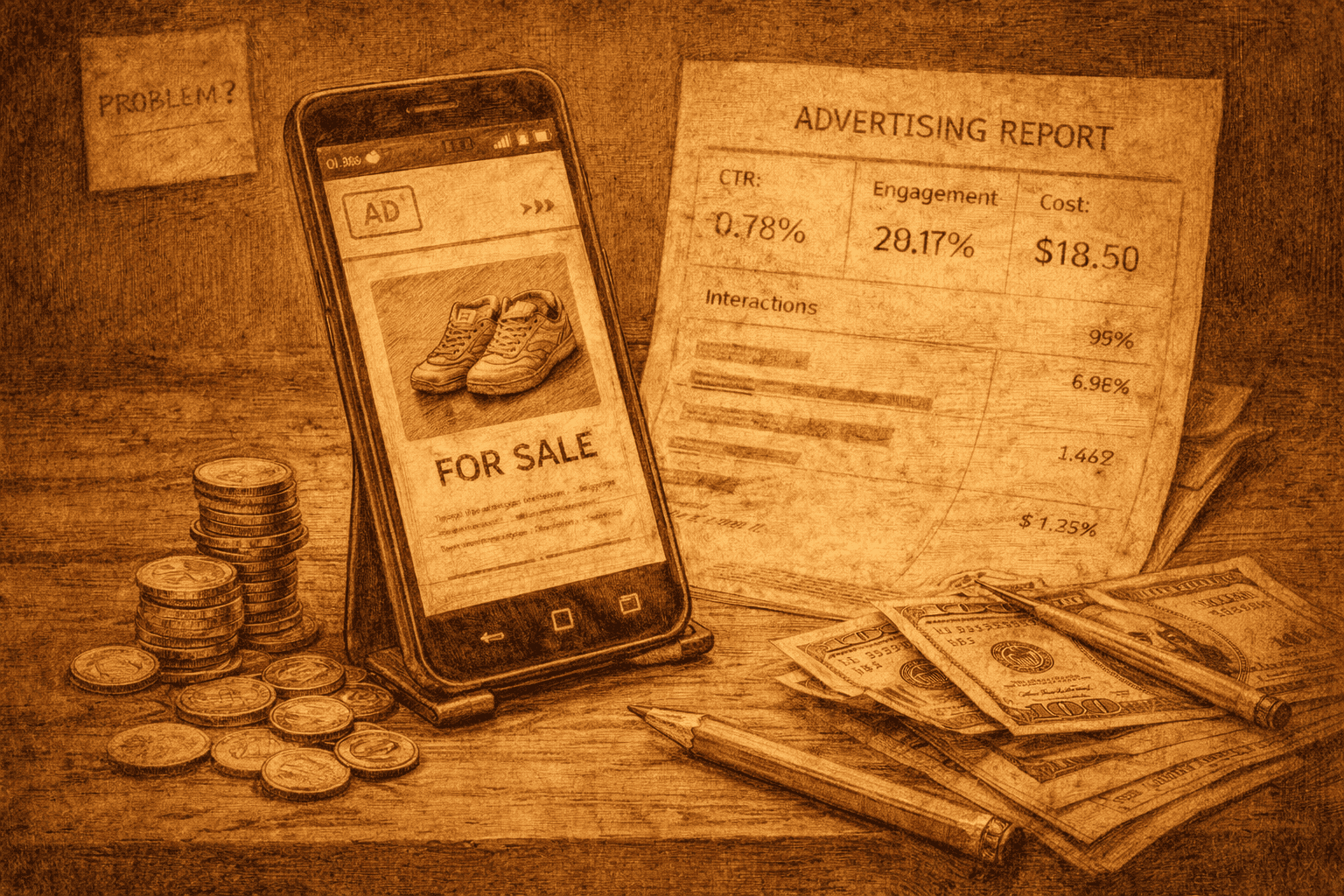
Are eBay Ads Worth It? Using Promoted Listings to Test Demand
Ads are usually discussed in terms of scale.
- More visibility.
- More reach.
- More sales.
That framing makes them emotionally loaded.
If ads work, you’re “doing well”.
If they don’t, you’ve failed twice, once on the item, and once on the spend.
That’s not how I think about them anymore.
For me, ads are not a way to grow. They’re a way to learn.
Using eBay Ads to Try to Force Sales
I treated ads as a solution.
If something didn’t sell organically, ads felt like escalation. A way to force movement. A way to give an item one last push.
That mindset blurred the signal.
When ads are expected to perform, every result feels charged.
You end up rationalising weak outcomes or blaming execution instead of listening to what the data is actually saying.
What eBay Ads Actually Tell You
Ads answer a very narrow question very quickly.
If people are shown this item more often, do they engage?
- Not buy.
- Not convert.
- Engage.
Clicks, saves, watches, time spent, these are not growth metrics. They’re evidence markers.
They tell you whether demand exists once visibility is removed as an excuse.
What It Means When an Item Gets Views but No Interest
Without ads, it’s easy to tell yourself a slow item just hasn’t been seen yet.
Ads remove that ambiguity.
If an item gets exposure and still produces no meaningful engagement, that’s information you didn’t have before.
Clean, uncomfortable, useful information.
At that point, the decision becomes simpler.
When to Use eBay Ads (and When Not To)
I only use ads when I’m uncertain, not when I’m confident.
If I already believe demand exists, I don’t need them. If I believe demand doesn’t exist, I don’t need them either.
Ads sit in the middle. They’re for resolving doubt.
I run them briefly, with limited expectations, and I stop them as soon as the signal is clear.
That makes them cheap in every sense.
What eBay Ads Won’t Fix
Ads are not:
- a way to rescue bad inventory
- a substitute for judgement
- proof that something should work
If an item needs ads to sell at all, that tells you something important about its underlying demand.
Ignoring that lesson is how ads turn into a habit instead of a tool.
Why Sellers Keep Running Ads Too Long
People keep ads running because stopping feels like giving up.
That’s the same mistake as waiting too long, just with a budget attached.
Once you’ve learned what you needed to learn, the correct move is to stop. Letting ads continue doesn’t increase clarity. It just delays the next decision.
Why Ads Come Last in the Process
Ads are the last step because they deal with the last uncertainty.
By the time you get here, you’ve already:
- distinguished demand from listing problems
- recognised hidden decisions
- accepted stopping
- reframed where appropriate
Ads don’t replace any of that. They confirm it.
Used this way, they’re calm, finite, and unemotional.
That’s when they’re most useful.
This post is part of:
What to do when items don’t sell (and why optimisation isn’t the answer)