This post closes a specific case study.
Earlier, I wrote about why I decided to test golf clubs even though they didn’t fit my existing system.
That post captured the thinking before the outcome was known.
This one documents what actually happened, what mattered, and the decision that followed.
Why the test happened
At the time, I was exploring where Steve Flips should focus.
I was thinking about whether golf deserved its own resale lane, potentially under the Weekend Golfers name.
I understood the category, I knew the brands, and the perceived resale value made golf clubs look like serious inventory.
The test wasn’t about proving I could flip clubs. It was about understanding whether this category belonged in my system at all.
What actually happened
I bought a batch of golf clubs and listed them for resale.
They sold.
Some moved faster than others.
The process worked in the narrow sense that inventory turned into cash. But the day-to-day reality of handling the stock became obvious very quickly.
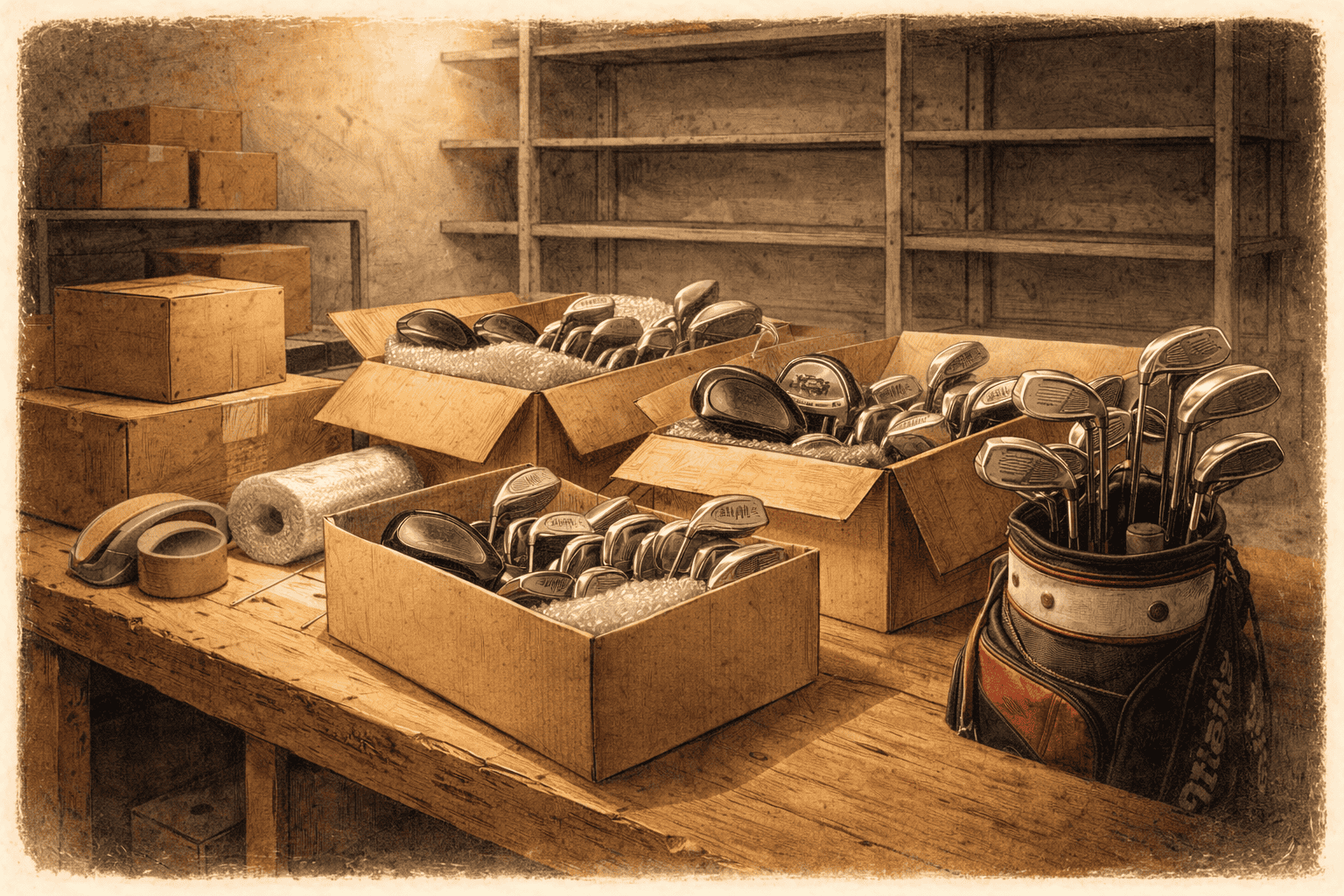
Every club required space, packaging, and care.
- Preparing a single item took noticeably longer than listing and shipping simpler apparel.
- Storage was awkward.
- Packing materials were bulky.
Nothing about the process felt light.
At the same time, I was selling polos and jumpers that could be photographed quickly, folded into a bag, and shipped in minutes.
The contrast was hard to ignore.
What surprised me
The biggest surprise wasn’t demand or pricing.
It was how much friction the category introduced.
Golf clubs demanded attention in a way other inventory didn’t. They asked for more time per unit, more physical effort, and more mental overhead.
Even when sales happened, the work surrounding them felt heavy.
That friction mattered more than I expected.
The sales outcome
At a high level, the numbers were fine.
Capital went in and came back out. The result wasn’t a disaster.
But once time, handling, and operational drag were accounted for, the return no longer looked attractive relative to simpler items.
This wasn’t a margin problem in isolation. It was a system problem.
Why I removed golf clubs from my system
After working through the process, the decision became clear.
Golf clubs are no longer bought or sold for resale.
That decision isn’t emotional and it isn’t reactive. It’s structural. The category doesn’t fit how I want to work, how I want to ship, or how I want to allocate attention.
As a golfer, I may still buy and sell clubs for personal use. Occasionally, something may appear that makes it hard to say no.
But golf clubs no longer have a place in my resale system.
What this clarified instead
This case reinforced something I already suspected.
I prefer low-friction systems.
That applies to physical inventory, where simpler items move faster with less effort.
It also applies to digital work, where fulfilment is near zero and attention can stay focused on creation rather than logistics.
Around the same time, I leaned further into digital products under the Weekend Golfers name and away from heavy physical handling.
That direction wasn’t caused by this case alone, but this experience made the trade-off undeniable.
Why this case is closed
This test answered the question it set out to answer.
- Golf clubs don’t belong in my resale system.
- There’s nothing left to optimise, revisit, or refine here.
- The decision stands unless conditions change materially.
That’s why this post exists.
References
Why I tested golf clubs even though they didn’t fit my existing system
Unboxing video: I spent £1K on golf clubs to resell
Outcome video: £1000 golf flip profit revealed