Leather jackets feel like premium stock.
They are heavier, postage costs more, fees take a bigger absolute bite, and because they look substantial, sellers regularly convince themselves they deserve three-figure pricing.
When that assumption is wrong, capital gets trapped quickly.
Since April 2025, I’ve bought three batches of vintage leather jackets from two different suppliers. Across those purchases, I’ve bought 101 jackets.
This post shows what they have actually sold for on eBay UK, how quickly the money came back, how entry price changed the risk, what happened when I tested higher tiers, and what the numbers look like when emotion is removed from the category.
All figures come from exported sales data. Net numbers are after marketplace fees and shipping, before tax.
This is not a highlight reel. It includes grading loss, supplier problems and a live batch still in progress.
Batch Overview: Three Leather Jacket Buys
| Metric | April 2025 Fox Vintage Wholesale | August 2025 Vintage Wholesale Supply | March 2026 Vintage Wholesale Supply |
|---|---|---|---|
| Units Purchased | 25 | 26 | 50 |
| Discarded | 2 | 3 | 1 (so far) |
| Sellable Units | 23 | 23 | In progress |
| Sold So Far | 12 | 13 | 0 |
| Still Live | 11 | 10 | 13 processed |
| Total Spend | £209.40 | £100.00 | £210.00 |
| Cost per Unit | £8.37 | £3.85 | £4.20 |
| True Cost per Sellable Unit | £9.10 | £4.35 | In progress |
| Gross Income | £416.08 | £493.74 | £0.00 |
| Net Return (Realised) | £195.77 | £372.36 | In progress |
| ROI (Realised) | 195% | 776% | In progress |
| Status | Partially Realised | Partially Realised | Ongoing |
The first two batches are mature enough to analyse properly. The third batch is live and being worked through.
Blended Results Across 46 Sellable Jackets
Looking only at Batches 1 and 2:
- Total sellable jackets: 46
- Total capital deployed: £309.40
- Combined gross revenue: £909.82
- Combined realised net return: £568.13
That equates to:
Blended realised ROI: 183%
Average realised net per jacket: £12.35
Across 46 real jackets, after fees and postage, each unit has returned just over £12 in net profit so far.
This is not built on one high value sale. It is built on consistent recycler pricing with occasional upside.
Sell-Through and Break-Even
Across the 46 sellable jackets in Batches 1 and 2:
25 have sold.
21 are still live.
That gives a current sell-through of 54%.
Batch 2 cost £100 in total. With realised net per jacket landing in the mid-teens, break-even required roughly five to six average sales.
Recovery happened early in the batch lifecycle.
Once the first five or six jackets sold, the capital was back. Everything after that moved from recovery into margin.
Sell-through matters more than headline ROI.
A 776% ROI number means very little if it takes years to realise. What matters is how quickly you get your original money back and how steadily the rest clears.
Both batches recovered early and continue to thin out gradually rather than stalling completely.
That is a healthy pattern.
When recovery slows and effort starts to outweigh return, that’s when you need to reassess whether a category is still earning its place. I’ve written more about that inflection point in When eBay Stops Being Worth Your Time.
What Vintage Leather Jackets Actually Sell For
Based on my own sales across Batches 1 and 2, the realistic selling price for most generic vintage leather jackets on eBay UK sits between £30 and £45.
Across those batches:
- The majority of jackets sold inside the £30–£45 band.
- A smaller group pushed into the £45–£80 range.
- Only a handful exceeded £80.
Of 25 jackets sold so far, 14 sold between £30–£45, 8 between £45–£80, and 3 above £80.
The median sale price landed in the mid-£30s.
Three-figure sales exist, but they are brand-driven and selective. They are not the default.
If you price average, unbranded leather consistently at £80–£120, you will slow sell-through and compress recovery.
The recycler band is lower than many sellers assume.
One Real Example: Ducati Dainese
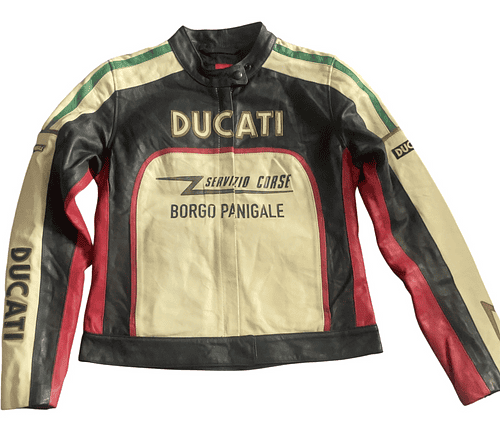
From Batch 2:
Ducati Dainese Leather Motorcycle Jacket – Borgo Panigale – Size 46 (Small)
Purchase price: £4.00
Initial list price: £125.00 + £6 postage
After 26 days, I sent a targeted offer of £94 + £6 postage.
From the buyer’s perspective, that showed as:
- £100 total
- £25 saving
Buyers like round numbers. £100 all-in feels cleaner than £119 or £125.
The jacket sold at that offer price.
Fees and costs:
- Fixed final value fee: £0.36
- Final value fee: £10.68
- Regulatory operating fee: £0.42
- Postage cost: £5.15
Net return: £79.39
ROI: 1,985%
Net profit margin: 79%
A few important points:
- This was a small size.
- It was not discounted out of panic.
- The offer was deliberate and psychological.
- The round-number all-in total helped the close.
This is what selective upside looks like in batch buying.
It is not typical. Most jackets do not sell at £100+.
But when brand equity and category demand justify it, higher tiers are viable.
The key is entry price.
At £4 cost, I could confidently list at £125 and test that tier without pressure.
At £50–£70 cost, that same test would carry more pressure.
One Underperforming Example: Mid-Tier Reality
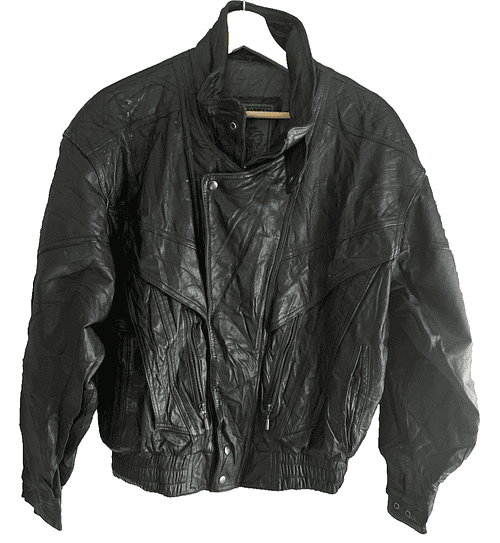
From Batch 1:
- Generic vintage leather jacket
- Purchase price: £8.37
- Listed on Depop at £18.00
It sold for £18.00 after nine months.
Fees were £0.96.
Shipping cost was £0.00.
Net return landed at £8.67.
ROI was 104%.
Net profit margin was 48%.
This is far more typical than the Ducati example.
Nine months to double your money is not exciting.
The initial pricing expectation was clearly wrong. This jacket never justified a higher tier. It was a low-demand, mid-tier piece that eventually cleared cheaply.
It still worked.
But it tied up capital for nine months to produce £8.67 in profit.
At an £8.37 entry cost, that is acceptable but not strong.
This is the other side of batch buying.
Not every jacket is a margin driver. Some are slow recyclers. Some are small profit drips.
This is why sell-through and entry price matter more than headline ROI.
Most jackets live closer to this outcome than the 1,985% Ducati return.
How Entry Price Changes Everything
At £4 per unit, testing £125 on a strong brand is straightforward.
Even at £10–£12 per unit, I would still test higher tiers when justified.
The pressure changes when you are into £70+ territory.
At that level, a slow sale or forced reduction hurts properly. You are defending capital, not testing upside.
Batch buying at £4 per unit gives flexibility. Higher-ticket sourcing demands precision.
The numbers behave differently depending on where you enter.
Supplier Risk and Why I Bought Again
My experience with Vintage Wholesale Supply has been inconsistent. Customer service has been poor. Grading has not always matched expectation. Some of my weakest bales overall have come from them.
Despite that, leather jackets from them have worked financially.
The March 2026 batch arrived in four boxes. One was left in the rain without a knock on my door. Another arrived torn open, and several jackets were wet and sandy. One has already been disposed of and more may follow once fully inspected.
I reported a missing parcel and received no reply.
I bought again anyway.
The reason was simple. The previous £4-per-unit batch produced a realised ROI of 776%. Even modelling discard risk and pricing reductions, the downside still worked.
If the entry price had been £10–£12, I would not have accepted that level of uncertainty.
The decision was not emotional. It was based on the numbers.
What Happens If Batch 3 Goes Wrong
If five jackets from the current batch prove unsellable, true cost per sellable unit rises to roughly £4.67.
If eight are unsellable, it rises to about £5.
Assume a conservative scenario:
45 sellable jackets.
Average net per jacket £25 after fees and postage.
That produces £1,125 net recovery on a £210 spend.
Margin compresses, but the batch still works.
The deal only truly breaks if several things combine at once:
- High discard rate.
- Average sale price collapsing below £30.
- Slow sell-through without price adjustment.
- Fees eroding more than one-third of revenue.
Wholesale is not about avoiding risk. It is about leaving room for it.
What Most Sellers Get Wrong About Leather Jackets
Leather jackets look premium, so sellers price them as if they are rare.
Most are not.
The majority of vintage leather on eBay UK sits in a crowded mid-tier. Generic brands, common sizes and standard bomber cuts are heavily supplied. Pricing those at £80–£120 without strong brand support leads to slow movement and eventual reductions.
Another mistake is anchoring to one strong sold listing.
Seeing one Ducati or Schott sell for three figures does not mean every leather jacket deserves that tier. The outliers distort perception.
The third mistake is ignoring fees and postage weight.
Leather jackets are heavier than shirts or knitwear. Postage is higher. Final value fees take a larger absolute bite because the sale prices are higher. A £10 pricing error in this category matters more than it does in lower-ticket clothing.
The final mistake is defending the original price for too long.
Leather does not deteriorate quickly, but capital does. A jacket sitting for 90 days at £89 that would have sold in 30 days at £59 is not “strong stock”. It is trapped money.
The sellers who make this category work understand the true recycler band, test selectively above it, and adjust quickly when the market signals back.
That is the difference between margin and stagnation.
Psychological Capital Pressure
There is also a mental component.
Stock bought at £4 allows calm decisions. You can test, adjust and move without stress.
Stock bought at £70 creates hesitation. Sellers cling to prices because reducing feels like admitting failure.
That pressure affects pricing discipline more than people admit.
Low entry cost does not just change maths. It changes behaviour.
Capital Allocation: Batch vs Individual
£210 in Batch 3 bought 50 jackets.
The same £210 spent sourcing individually at £30 per unit would buy seven pieces.
Seven pieces concentrate risk. Fifty spread it.
Batch buying carries grading risk. Individual sourcing carries capital concentration risk.
Both models work when the numbers are respected.
What This Case Study Shows
Vintage leather jackets on eBay UK do not consistently sell at £100+.
Most generic pieces cluster in the £30–£45 band, with a median in the mid-£30s.
Selective brand-driven pieces push higher, but they are the minority.
Across 46 sellable jackets from the first two batches:
- Blended realised ROI sits at 183%.
- Average realised net per jacket sits at £12.35.
- Break-even occurred early in each batch.
Lower entry price dramatically improved flexibility and ROI.
Discard rates were manageable at £4 per unit.
Higher-tier pricing worked when supported by brand and adjusted when needed.
Supplier inconsistency and transit damage were real variables, not theoretical ones.
Leather jackets work in batches when:
- The entry price leaves room.
- You understand the real selling band.
- You tier realistically.
- You adjust quickly.
- You price supplier risk into your buying decision.
This category is not built on jackpots.
It is built on disciplined buying, controlled pricing and predictable recycling.
The numbers matter more than the narrative.
This is one category inside a broader record of sourcing and margin decisions. You can view the rest in Case Studies.
Quick Answers
What do vintage leather jackets actually sell for on eBay UK?
Based on my sales across 46 sellable jackets, most generic vintage leather jackets sell between £30 and £45. A smaller group pushes into the £45–£80 range, and only a minority exceed £80. The median sale price lands in the mid-£30s.
Are leather jackets profitable to resell?
They can be, but entry price determines everything. At £4 per unit, the margin buffer allows testing and adjustment. At £10–£12 per unit and above, pricing discipline becomes far more important.
How long do leather jackets take to sell on eBay?
Stronger brands can move within 30 days. Generic mid-tier pieces typically take 30–60 days. Sell-through depends heavily on pricing inside the realistic £30–£45 band.