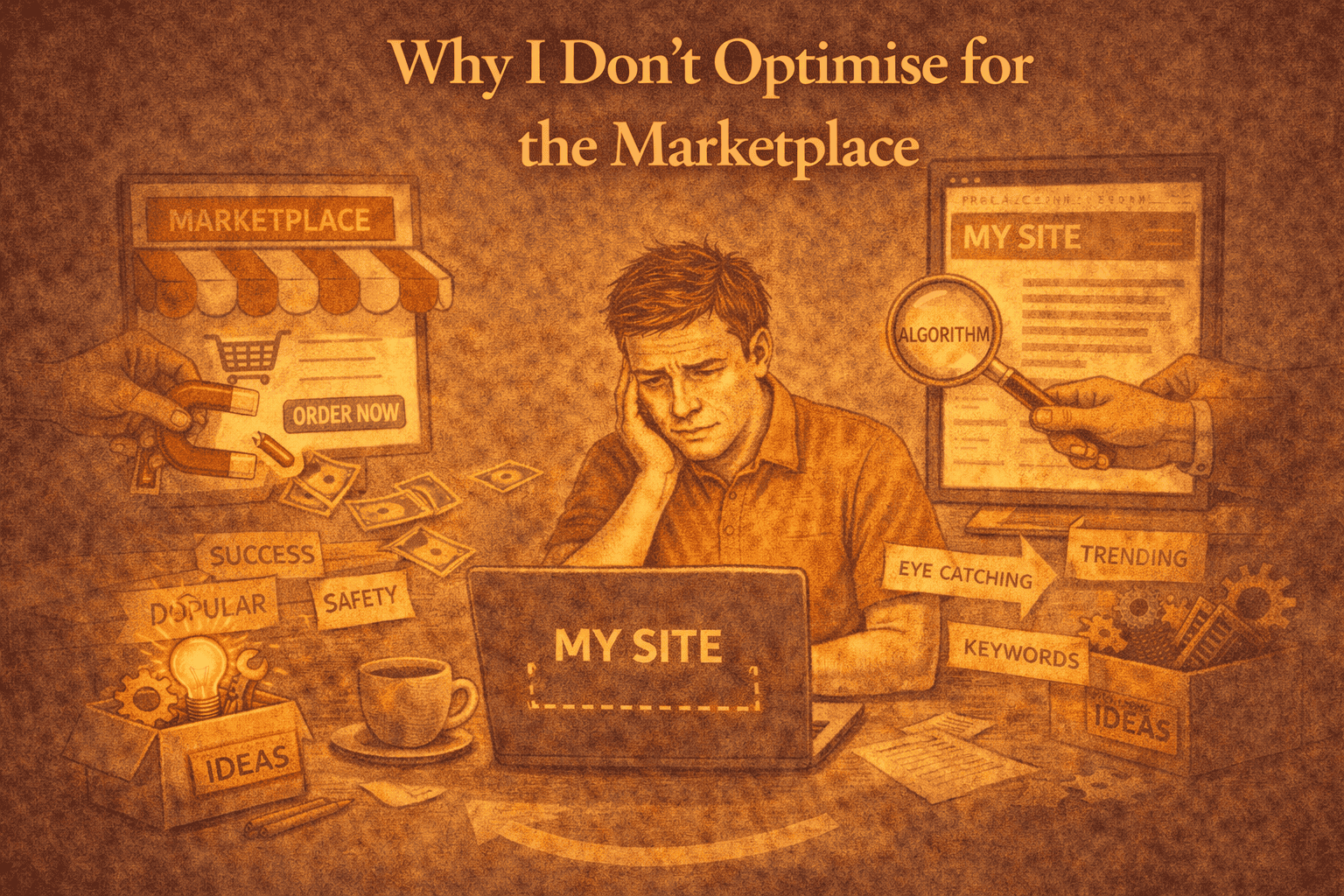
Marketplaces are not neutral.
That was the first thing I learned, and it took longer than I expected.
Early in my work, I treated marketplace optimisation as almost an inevitable step: if I wanted something to be found, I’d adjust it to fit the signals the platform rewarded.
- Rankings
- sales history
- visibility metrics
they all felt like legitimate measures of credibility.
But over time I noticed something subtle.
When I began to optimise for marketplace signals, I was no longer designing for my own intent. I was designing for what the marketplace rewarded. That changed the shape of the work itself.
I didn’t notice this on the first few projects because optimisation always felt like “improvement.” It was just making the work more discoverable, right?
But the incentives baked into marketplaces aren’t neutral. They reward certain shapes of work and penalise others. What performs well is usually what fits expectations, not what stands on its own terms.
When I optimised for marketplace signals, I found myself unconsciously letting those signals steer the work.
Clarity gave way to conformity. Finishing became harder, because optimisation invites ongoing tweaking, reacting to metrics rather than respecting boundaries.
At some point I realised that something quieter but more precise was happening: optimisation was becoming external validation, a pattern I first confronted when building Info Product Build.
So I stopped.
Not because marketplaces are bad. They’re not. They’re powerful distribution channels. But they are distribution channels, not validators of worth or clarity.
When I stopped optimising for marketplace approval, my work became quieter and more specific.
It became easier to finish, because I wasn’t trying to satisfy an external performance profile. I was designing for what the work needed to be, not what an algorithm might prefer.
If something works because it fits, that’s sustainable. If it works because it performs, it creates pressure to keep performing.
I’m no longer interested in that trade-off and that choice has changed the way I build.